 KH
KH  FR
FR  AR
AR CN
CNCambodia, South Korea Forge Deeper Green Tech Alliance to Drive E-Mobility Revolution
AKP Phnom Penh, April 28, 2026 --
Cambodia doubles down on its green economy transition, with its top diplomat in Seoul hailing South Korea’s role in building local expertise for EV battery management—from production to recycling—as the “solid foundation” for sustainable growth and carbon reduction.
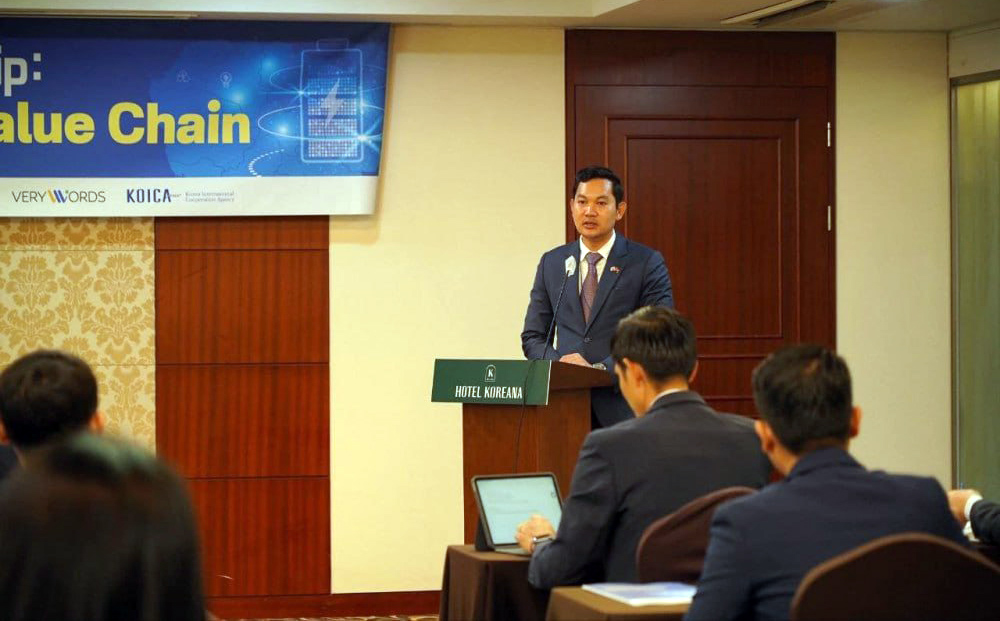
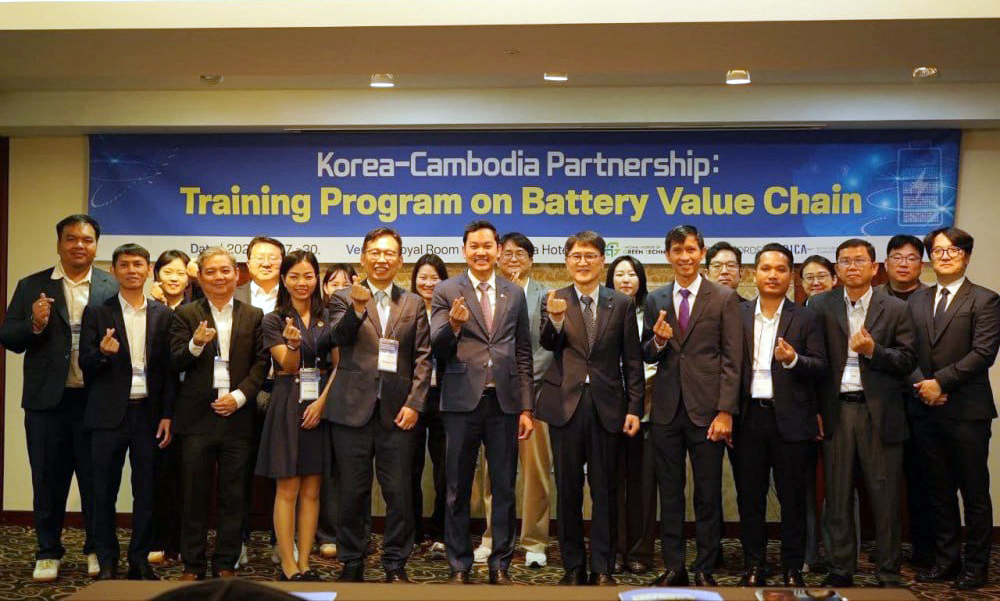
Ambassador H.E. Khuon Phon Rattanak made the remarks during a capacity-building workshop for Cambodian officials focused on emerging technologies and policy frameworks for "e-mobility," held Monday at the Koreana Hotel in Seoul.
The programme, organised by the Korea International Cooperation Agency (KOICA) and the National Institute of Green Technology (NIGT), is a cornerstone of South Korea’s Official Development Assistance (ODA) efforts. It aims to bolster Cambodia’s institutional capacity in managing electric vehicle (EV) battery lifecycles—spanning production, usage, collection, and recycling.
"Developing the e-mobility sector is not only a vital step toward mitigating environmental pollution and climate change, but it is also a central pillar in transforming Cambodia into a green and digital economy," Ambassador Phon Rattanak said during the opening ceremony.
The workshop brought together technical experts from Cambodia’s Ministry of Public Works and Transport, the Ministry of Environment, and the Ministry of Mines and Energy. These agencies are at the forefront of the country’s push to modernize its transport infrastructure.
The Ambassador emphasised that international partnerships, particularly with South Korea, are essential for technology transfer and knowledge sharing. He noted that building a skilled workforce is the "solid foundation" required for Cambodia to remain competitive while pursuing sustainable development.
According to the embassy, this initiative aligns with the Royal Government of Cambodia’s long-term vision to reduce carbon emissions and improve the overall well-being of its citizens through innovative, eco-friendly industrial policies.
By K. Rithy Reak