 KH
KH  FR
FR  AR
AR CN
CNIndia’s Goods and Services Tax (GST) Reforms: For inclusive prosperity and economic transformation
AKP Phnom Penh, September 12, 2025 --
Following an announcement by the Prime Minister of India Narendra Modi during his address at the 79th Independence Day of India on 15 August 2025, the government of India has introduced significant reforms in the Goods and Services Tax (GST) last week. In his address, Prime Minister Modi has said that “The government will bring Next-Generation GST reforms, which will bring down tax burden on the common man.” The Prime Minister also said that the reforms would directly benefit the common man, farmers, MSMEs, women, youth and middle-class families, while strengthening India’s long-term growth.
The GST which was first introduced in India in 2017 was then a revolutionary step in taking India’s fiscal landscape to the next level by integrating various states and central taxes, fulfilling the important objective of “One Nation-One Tax”.
The latest tax reforms of India, which is also known as GST 2.0 is a Next-Generation reform primarily focused on delivering citizen-centric relief and it has reduced tax burden on common citizens besides simplifying the rules governing taxation in India. It is also expected to provide impetus to overall India’s economic growth as easier access to goods and services will fuel consumption and thereby neutralise inflation and promote growth.
The GST reforms has further rationalised India’s tax structure, brought in simplification and has also introduced structural reforms. The reforms will also remove some complexities which existed in the GST system since its inception in 2017 by simplifying categorisation of products and by bringing in more clarity to the tax rates. To this end, the Government has decided to reduce the number of slabs from the existing 0%, 5%, 12 %, 18% and 28% to just two main slabs of 5% and 18%. Further, it has been decided to introduce a 40% de-merit rate for luxury and sin goods like tobacco etc. However, this slab will only affect a small percentage of goods. The revised GST rates will come into effect from 22 September 2025.
The GST reforms build on the experience gained from successful implementation of India’s GST regime in the past 8 years. Besides widening the tax base, the reforms will empower MSMEs and manufacturers, fix inverted duty structures and support the Make in India initiatives of the Government. It will also bring in new IT tools to simplify registrations and refund of claims and also introduce AI-driven risk reduction.
Under the new regime, the GST for basic daily food commodities like Indian breads and products like Ultra-High Temperature milk and pre-packaged paneer (Indian cheese) have been reduced to 0%. Other items like packaged food, pasta, coffee etc. have been reduced from 12% or 18% to 5 % and household goods like toiletries and tableware are also categorised under the 5% bracket. The reduction in rates of GST in the agricultural sector will benefit farmers by promoting sustainable farming practices and reducing dependence on imports. GST on products like tractors and its parts have been reduced from 12% or 18% to 5% as also on tools used for agricultural activities.
Further, reduction of GST rates on construction materials is expected to boost the housing and property sector as rates on cement, marble, granite and wood pallets have been significantly reduced. The reforms also benefited the services sector as GST on salons, gyms and hotel stays have been reduced to 5%. The medical sector, particularly life saving drugs and health insurance products have been put in the exempted category and this will undoubtedly improve accessibility for large sections of the population.
The reforms will bring about a cycle of growth and improve ease of living. It is timely as it will also bring in renewed energy to the manufacturing sector which in turn could boost domestic value addition and exports. The reforms have been welcomed by economists, businesses and consumers alike.
The GST reforms in India will undoubtedly provide opportunities to Cambodian businesses who wish to access the Indian market as well as those seeking investment opportunities.
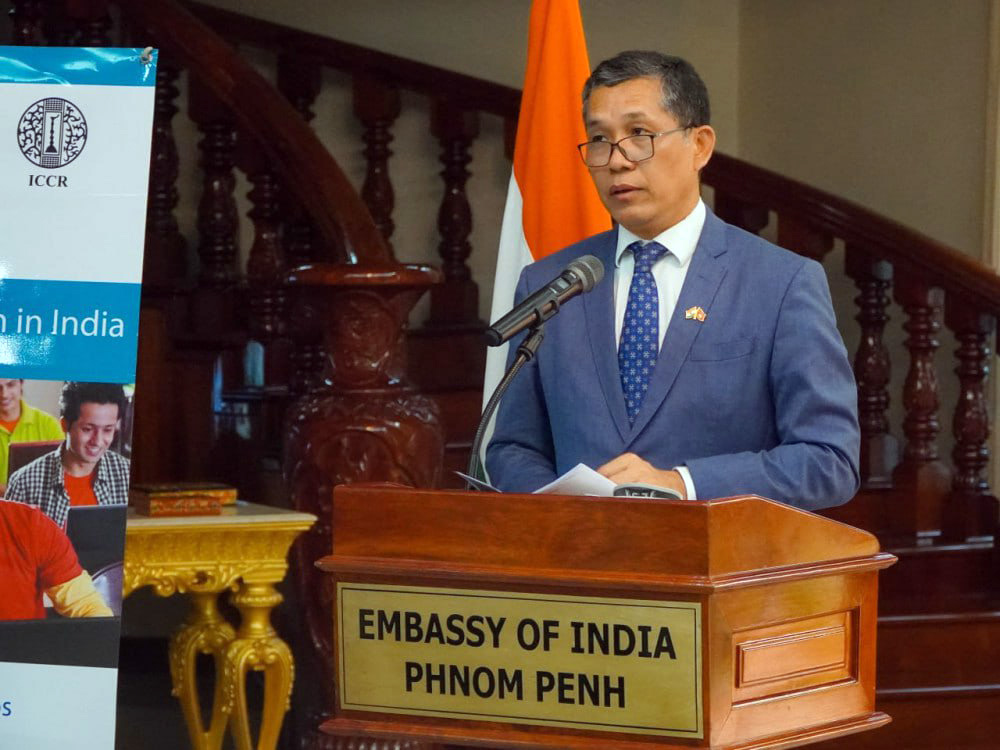
By Vanlalvawna Bawitlung
Ambassador of India to the Kingdom of Cambodia.